

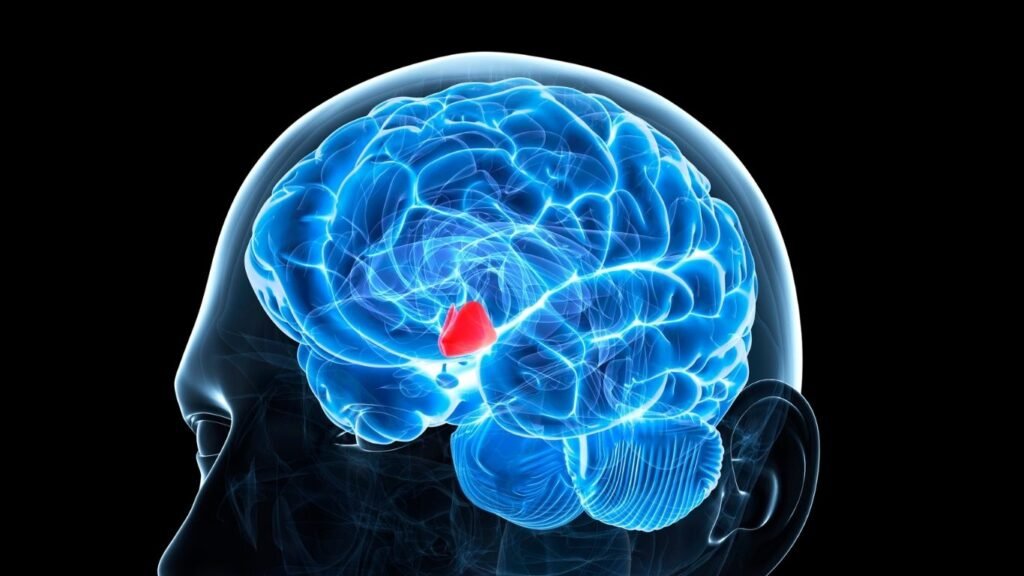
The hypothalamus is a small region near the base of the brain that helps maintain homeostasis—the body’s internal balance. Although small, it regulates many essential functions, including body temperature, hunger, thirst, sleep, stress responses and hormone release.
It acts as an important link between the nervous system and the endocrine system, largely by controlling the pituitary gland. By coordinating nerve signals and hormonal responses, the hypothalamus helps the body respond to changing conditions and maintain the internal environment needed for survival.
Anatomy and Location Hypothalamus
The hypothalamus lies below the thalamus and above the pituitary gland, near the floor of the third ventricle, a fluid-filled space inside the brain. It is part of the diencephalon, a region involved in relaying and processing information.
The hypothalamus contains clusters of nerve cells called nuclei. Different nuclei contribute to different functions, including temperature regulation, appetite, thirst, sleep and hormone control. These regions work together rather than operating as completely separate control centres.
Core Functions of Hypothalamus
Thermoregulation (The Body’s Thermostat)
The preoptic area of the hypothalamus continuously monitors core blood temperature using central thermosensitive neurons and peripheral input from skin thermoreceptors.
- Cooling the body: When body temperature rises, temperature-sensitive regions in the preoptic area of the hypothalamus coordinate responses such as sweating and widening blood vessels near the skin. These processes help release heat.
- Conserving and producing heat: When body temperature falls, the hypothalamus coordinates responses such as narrowing blood vessels near the skin and shivering, which produces heat through muscle activity. It also helps regulate heat production through other physiological mechanisms.
Energy Homeostasis and Appetite Regulation
The hypothalamus helps regulate hunger, fullness and how the body uses stored energy. It receives signals from the digestive system and fat tissue that indicate whether the body needs food or has enough energy available.
For example, fat cells release a hormone called leptin, which helps signal the body’s energy reserves. The stomach releases ghrelin, which tends to increase hunger, particularly before meals. Hormones released by the intestines, including PYY and GLP-1, can help reduce appetite after eating.
These signals influence groups of neurons in the hypothalamus, including those in the arcuate nucleus. Some promote food intake, while others help suppress it. Their combined activity helps regulate eating and energy balance, alongside other brain regions involved in reward, emotion and decision-making.
Fluid Balance and Osmoregulation
The hypothalamus helps regulate how much water the body retains. Specialised cells detect changes in the concentration of substances dissolved in the blood. When the body loses water and the blood becomes more concentrated, the hypothalamus helps trigger thirst and increases the release of antidiuretic hormone (ADH), also called vasopressin.
ADH is produced by neurons in the hypothalamus and transported to the posterior pituitary, where it is released into the bloodstream. It acts on the kidneys, helping them reabsorb more water and produce less urine. Together, thirst and ADH help restore the body’s water balance.
What Happens if the Hypothalamus Is Damaged?
Hypothalamic dysfunction can result from conditions such as brain injuries, tumours, infections, surgery, radiation treatment or certain genetic disorders. Because the hypothalamus regulates many different processes, the effects depend on which areas are affected.
- Hormonal problems: Disrupted communication between the hypothalamus and pituitary gland can affect growth, reproduction, thyroid function and the body’s response to stress.
- Diabetes insipidus: Insufficient production or release of ADH can cause excessive urination and intense thirst. A similar condition can occur when the kidneys do not respond properly to the hormone.
- Appetite and weight changes: Damage to hypothalamic circuits that regulate hunger and energy expenditure can cause excessive weight gain or other disturbances in appetite.
- Memory problems: Damage to the mammillary bodies, which are associated with memory processing, can contribute to memory impairment. These structures can be affected in Wernicke-Korsakoff syndrome, a disorder associated with severe thiamine deficiency.
- Sleep and body-clock disturbances: Damage to the suprachiasmatic nucleus can disrupt circadian rhythms. Damage to other hypothalamic regions can also affect sleep and wakefulness.
Pituitary tumours can disrupt this system by compressing nearby structures or producing excess hormones. For example, prolactinomas produce too much prolactin and can cause reproductive problems, while growth-hormone-producing tumours can cause acromegaly. ACTH-producing pituitary tumours can cause Cushing disease. These are disorders of the pituitary-hypothalamic system, but they do not necessarily mean the hypothalamus itself is damaged.
Conclusion
The hypothalamus plays a crucial role in maintaining the body’s internal balance. It helps regulate temperature, hunger, thirst, sleep and hormone release by coordinating signals from the nervous system with responses from the endocrine and autonomic nervous systems.
Although small, it influences many essential processes that keep the body functioning. Understanding how the hypothalamus works also helps explain why damage to this region can affect several seemingly unrelated functions, from appetite and sleep to water balance and hormone regulation.
Sources:
Cleveland clinic – What is the Hypothalamus?
National Library of Medicine – Integrative Functions of the Hypothalamus.



[…] it takes action immediately. It sends a distress signal to another part of your brain called the hypothalamus, which acts as your body’s command […]