No animal can survive indefinitely with absolutely zero water in its body or environment, because water is essential for cellular chemistry, metabolism, and structure. However, many animals have evolved remarkable physiological, behavioural, and morphological adaptations that allow them to go long periods—sometimes an entire lifetime—without drinking free-standing water, or to survive near-total dehydration by entering suspended animation.
To survive extreme aridity, these creatures rely on a combination of evolutionary engineering, biochemical wizardry, and specialized behavioral adaptations that turn the fundamental laws of hydration upside down.
The Secret Weapon: Metabolic Water
When we think of water, we think of drinking from a stream or oasis. But desert-adapted animals manufacture their own internal water supply through a process called cellular respiration.
When an organism metabolizes carbohydrates, fats, or proteins for energy, the chemical breakdown produces water as a metabolic byproduct.
- The Fat Advantage: Fat yields more than double the metabolic water per gram compared to carbohydrates or proteins. When a animal burns stored fat, hydrogen atoms from the fat molecules combine with inhaled oxygen (O2) to create metabolic water (H2O).
- The kangaroo rat: These small rodents live in North America’s deserts and can survive without drinking free-standing water. Their diet consists mainly of seeds, which provide nutrients for energy and some water. As the animals metabolise these nutrients, they produce additional water internally.
Extreme Biological Engineering
To retain every micro-droplet of moisture, desert animals have evolved specialized organs that far outperform human biology.
Hyper-Efficient Kidneys
Mammals lose water primarily through urine. Desert specialists have altered this process dramatically:
- The Loop of Henle: In the kidneys of animals like the kangaroo rat and the desert hedgehog, the loop of Henle (the section of the nephron responsible for reabsorbing water) is exceptionally long. Their kidneys can produce urine several times more concentrated than the most concentrated human urine. This allows them to eliminate waste while losing relatively little water.
Their feces are also very dry, further reducing water loss.
Respiration and Nasal Cooling
Breathing can cause animals to lose water because moisture evaporates from the respiratory surfaces and leaves with exhaled air.
- Many desert mammals have specialized nasal passages that help reduce this loss. As warm, moist air is exhaled, the nasal passages cool it, causing some of its moisture to condense on their surfaces. The water can then be recovered instead of being lost with the breath.
This adaptation helps animals conserve water, particularly in hot, dry environments where evaporation can be a major challenge.
Behavioral and Physical Strategies
Water conservation is not just about internal biology. An animal’s behaviour can also determine how much moisture it loses.
- Nocturnal Lifestyle: Many desert animals are strictly nocturnal. By remaining underground in cool, humid burrows during the blistering day and only emerging at night when temperatures drop and humidity rises, they drastically cut down on evaporative cooling needs.
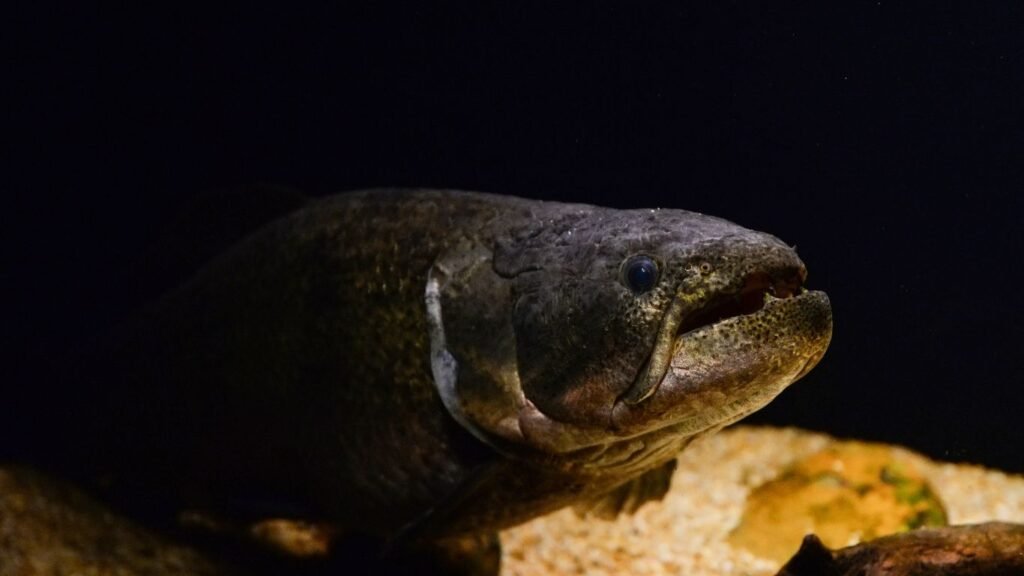
- Aestivation (Summer Dormancy): Some animals bypass multi-year droughts by shutting down their metabolism entirely. The African lungfish burrows into river mud, secretes a protective mucus cocoon, and enters a state of aestivation, surviving without water for up to four years until the rainy season returns.
Anhydrobiosis: Surviving Near-Complete Desiccation
Certain small invertebrates can lose virtually all body water (down to 1–3% or less of normal content) and enter a reversible state of suspended animation called anhydrobiosis (a form of cryptobiosis). Metabolism drops to undetectable levels, and the animal can remain viable for years or decades until rehydrated.
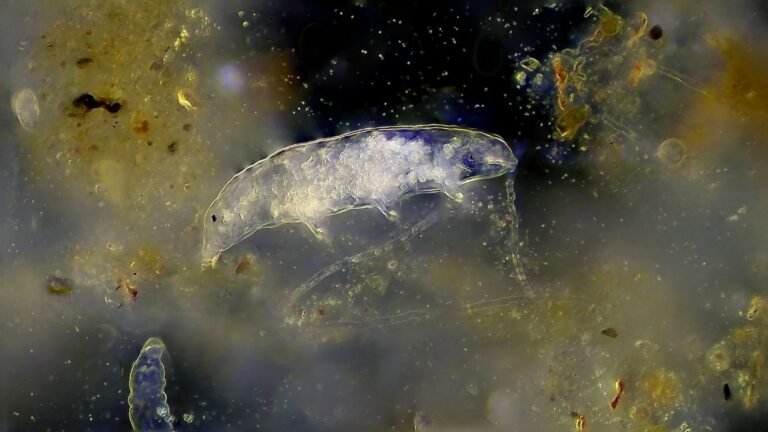
- Tardigrades (water bears): Can lose >95–97% of body water, form a compact “tun,” and survive extremes of desiccation, temperature, radiation, and vacuum. Protective proteins (including tardigrade-specific disordered proteins) and vitrification help stabilize cells.
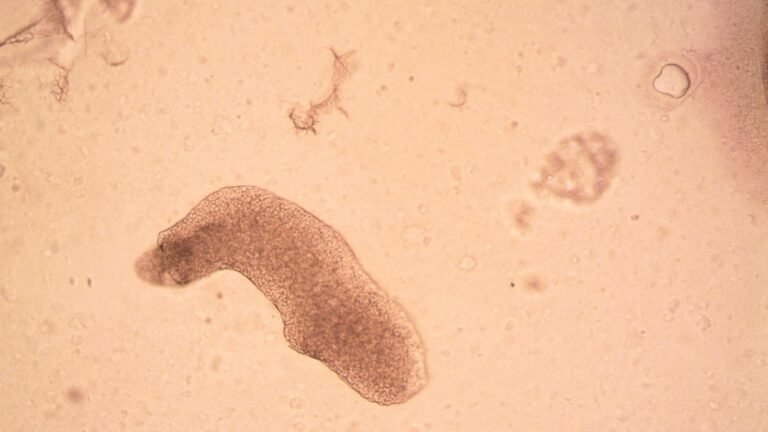
- Nematodes (roundworms): Many soil and plant-parasitic species (e.g., Aphelenchus avenae, Panagrolaimus, Ditylenchus) enter anhydrobiosis as juveniles or adults. Some require slow drying (preconditioning) to accumulate protectants; others tolerate rapid desiccation.
- Bdelloid rotifers: Survive desiccation at any life stage; some species do not rely heavily on the sugar trehalose and may use intrinsically disordered proteins instead.
- Brine shrimp (Artemia): Survive as dehydrated embryonic cysts (sold as “sea monkeys”).
- Chironomid midge Polypedilum vanderplanki: The largest known anhydrobiotic animal; its larvae can dry out completely in temporary African rock pools and revive when water returns. High levels of trehalose act as a water replacement that stabilizes membranes and proteins.
In these organisms, protectants such as the disaccharide trehalose (or specialized proteins) replace water molecules, prevent irreversible damage to membranes and proteins, and enable recovery upon rehydration.
Conclusion
Animals survive water scarcity through several different strategies. Some, like kangaroo rats, obtain water from food and produce additional water through metabolism while minimizing losses. Others avoid the hottest conditions, conserve moisture through specialized organs, or enter dormant states during drought.
The most extreme examples involve anhydrobiosis, in which certain small animals can survive losing most of their body water and become active again after rehydration.
These adaptations do not mean animals can live indefinitely without water under all conditions. Instead, they demonstrate how evolution has equipped different species to manage water scarcity in ways suited to their environments.