

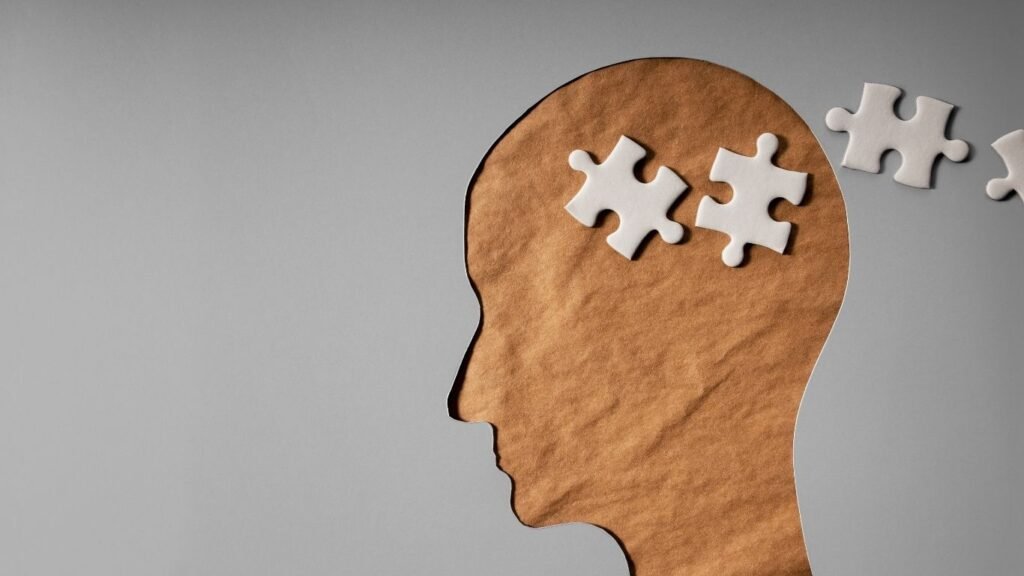
We often think of our memory like a video camera that records our lives, ready to be rewound and replayed with 100% accuracy. In reality, human memory is reconstructive, not reproductive. Each time you remember something, your brain rebuilds it from stored fragments, general knowledge, expectations and whatever you’ve learned since. That rebuilding is what makes memory flexible and useful, and it is also why errors creep in.
Because memories are rebuilt from incomplete information, our current beliefs, experiences, and expectations can influence what we remember. Mistakes aren’t simply rare failures of memory; they’re a natural consequence of how it works. These are not rare glitches but inherent features of how human memory works.
Reconstructive Nature of Memory
When we encode an experience, the brain does not store a complete, unchanging replica. Instead, it captures pieces: perceptual features in sensory cortices, relational and contextual binding involving the hippocampus, and schematic or semantic knowledge in neocortical networks. Retrieval reactivates and recombines these elements, often filling gaps with inferences drawn from general knowledge or current expectations.
This process is adaptive. It allows efficient storage (we do not need to retain every detail), supports generalization across similar events, enables simulation of future scenarios by recombining past elements, and permits updating of memories with new information. The same mechanisms that confer these benefits also produce distortions.
The Mechanisms of Incorrect Remembering
Suggestibility and the Misinformation Effect
Psychologist Elizabeth Loftus famously demonstrated how easily memories can be contaminated by outside information.
In her classic experiments, participants watched footage of a car crash and were later asked a simple question. Changing just one verb strongly affected their recall:
- When asked, “How fast were the cars going when they smashed into each other?” participants estimated significantly higher speeds and falsely remembered seeing shattered glass on the ground that wasn’t actually there.
- When asked with the word “hit,” their estimates were much more conservative.
Leading questions and misleading information can influence how people remember an event, potentially affecting the accuracy of eyewitness testimony.
Source Monitoring Errors
Sometimes you remember a fact, event, or conversation clearly, but you completely forget where you heard it. This is called a source monitoring error.
- Confusing Dreams with Reality: Your brain can generate vivid sensory imagery while you sleep. If a dream is emotionally intense, your waking brain might accidentally misfile it as something that actually happened.
- The “Cryptomnesia” Effect: You might read a brilliant idea in a book years ago, completely forget the source, and later believe you invented the idea entirely on your own.
Brain Shortcuts: Schemas and “Fill-in-the-Blank”
The human brain processes an overwhelming amount of sensory data every second. The brain uses schemas—mental frameworks built from past experiences—to interpret new information and make sense of familiar situations.—mental templates or expectations built from past experiences.
- If you parked your car in a familiar parking garage today, your brain doesn’t record every single detail of the empty stalls around it.
- Instead, it relies on your schema of “how parking usually works.”
- When you try to remember your parking spot later, your brain automatically fills in the gaps with what should have been there based on habit, sometimes leading you to misremember the exact floor or stall.
Neural Bases
Different brain regions contribute to remembering, recognizing, and checking the source of information. The hippocampus helps link elements of an experience into a memory, while parts of the prefrontal cortex help us evaluate where a memory came from and whether it fits the available evidence. These systems don’t always distinguish real experiences from plausible but incorrect memories perfectly.
Conclusion
In simple terms, we remember incorrectly because memory evolved to construct useful, flexible representations rather than perfect archival copies. Our memories are not perfect recordings of the past. Each time we remember something, our brains reconstruct the experience using stored information, knowledge, and expectations. This ability helps us learn and make sense of the world, but it also means that we can confidently remember details that never happened exactly as we recall them. Understanding these mechanisms clarifies both the fallibility and the remarkable functionality of human memory.



[…] clearly demonstrates that human memory is reconstructive, not a fixed recording. Instead of retrieving a pristine “video file,” your brain […]