Adrenaline (also known as epinephrine) is a hormone and neurotransmitter produced primarily by the adrenal glands, which sit on top of your kidneys. Often called the classic “fight-or-flight” hormone, adrenaline prepares the body for immediate physical action. During fear or acute stress, it floods your bloodstream within moments, triggering a cascade of physical changes: your heart pounds faster, your airways open wider, blood is shunted toward your muscles, and your senses sharpen.
Its effects are short-lived; adrenaline is rapidly broken down in the body, with a half-life of only a few minutes in the bloodstream. However, the physical effects of a stress response can last longer, depending on the situation and other hormones involved.
What Adrenaline Is and How Adrenaline Is Released
Adrenaline belongs to a class of molecules called catecholamines, alongside noradrenaline (norepinephrine) and dopamine. It is produced primarily in the adrenal medulla, the inner portion of the adrenal glands. Small groups of neurons in the brain also produce adrenaline, although noradrenaline plays a much larger role in the brain’s arousal, alertness, and attention systems.
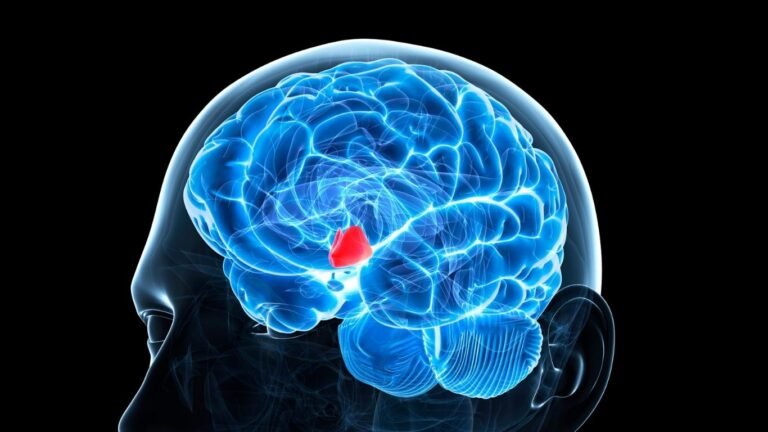
The process begins in the brain. When the brain identifies a potential threat, regions including the amygdala communicate with the hypothalamus. The hypothalamus then helps activate the sympathetic nervous system, initiating the body’s fight-or-flight response.
Sympathetic preganglionic nerve fibers travel to the adrenal medulla and release acetylcholine. This stimulates chromaffin cells to secrete adrenaline (and some norepinephrine) directly into the bloodstream. Circulating adrenaline then binds to alpha- and beta-adrenergic receptors on cells throughout the body, triggering widespread physiological changes.
Norepinephrine (noradrenaline) from sympathetic nerve endings often acts first or in parallel, reinforcing many of the same effects. The combination forms the classic acute stress, or “fight-or-flight,” response.
What Adrenaline Does to Your Body
Adrenaline acts on multiple systems simultaneously to maximize oxygen delivery, energy availability, and readiness for action:
- More fuel. The StatPearls entry notes higher blood glucose from glycogen and fat breakdown, increased oxygen consumption, and bronchiole dilation.
- Blood goes where it’s needed. Blood flow to parts of the digestive system decreases as blood vessels constrict, while circulation is adjusted to support organs and muscles needed for immediate action. That is why a scare can leave you pale, cold, or clammy. Geisinger’s list of signs includes cold or clammy hands, tense muscles, dilated pupils, dizziness, and nausea.
- A sharper mind. StatPearls says activation of this system brings more arousal, alertness, vigilance, focused attention, and reduced pain sensation.
- Blood pressure rises. Mayo Clinic summarizes it this way: adrenaline increases your heart rate, elevates your blood pressure, and boosts energy supplies.
Cortisol supports the stress response through a slower hormonal pathway. It helps maintain blood glucose availability and changes how the body allocates energy. Unlike adrenaline, whose effects begin rapidly, cortisol’s response develops over a longer period.
Fear isn’t the only trigger
The same mechanism operates whether the threat is life-threatening (a near-accident, physical confrontation) or psychological (stage fright, an important deadline, or watching a suspenseful scene). In modern life, many adrenaline surges are triggered by non-physical stressors. The body still prepares for physical action even when the appropriate response is cognitive or social rather than fighting or fleeing.
Adrenaline as Medicine
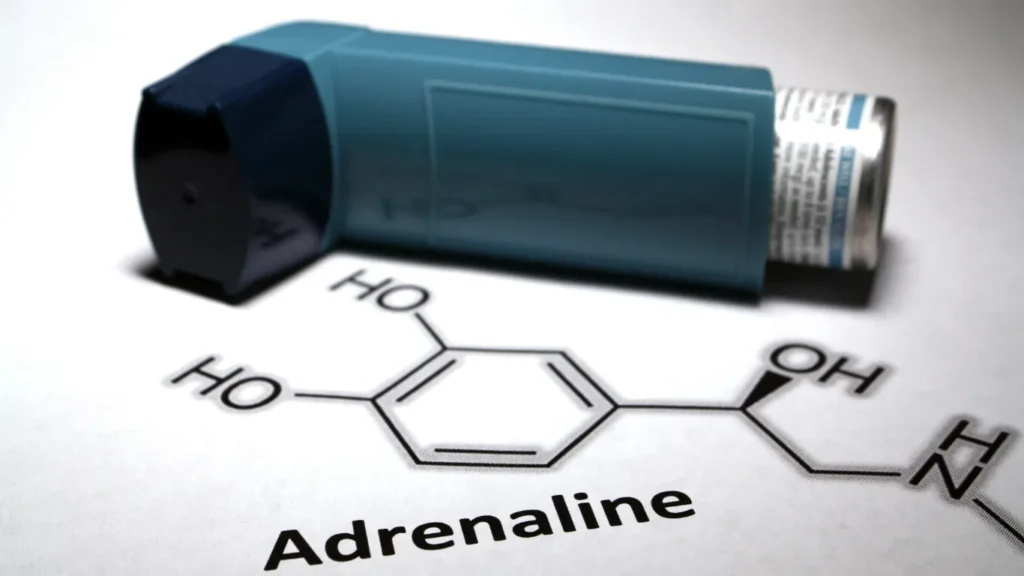
Beyond its role in the body, synthetic adrenaline is a critical emergency medication. It is the first-line treatment for anaphylaxis (severe allergic reaction), where it relaxes airway muscles and reverses life-threatening symptoms. Adrenaline is also used during cardiac arrest and certain severe medical emergencies. In septic shock, norepinephrine is generally the first-choice medication to raise blood pressure, although adrenaline may be used in selected cases. Adrenaline is not a routine treatment for ordinary asthma attacks, but it can help open airways during anaphylaxis.
Short-Term Benefit and Long-Term Considerations
In acute situations, the adrenaline response is highly adaptive and can enhance strength, speed, focus, and survival chances. However, frequent or prolonged activation—common with chronic stress, anxiety disorders, or repeated psychological threats—keeps the body in a heightened state. Repeated or prolonged stress can keep the body’s stress-response systems highly active. Over time, this may contribute to sleep problems, elevated blood pressure, and cardiovascular strain. These effects involve several interacting hormones and nervous-system pathways, not adrenaline alone.
Conclusion
Adrenaline is a normal, useful hormone. In a sudden threat it speeds your heart, opens your airways, frees up energy, and sharpens your attention; then your body clears it within minutes. It becomes a health problem only when the stress response stays on for long periods, in panic disorder, or in rare cases of adrenaline-secreting tumours. “Adrenal fatigue” is not a recognized diagnosis, but persistent fatigue deserves a real medical evaluation.
Sources: