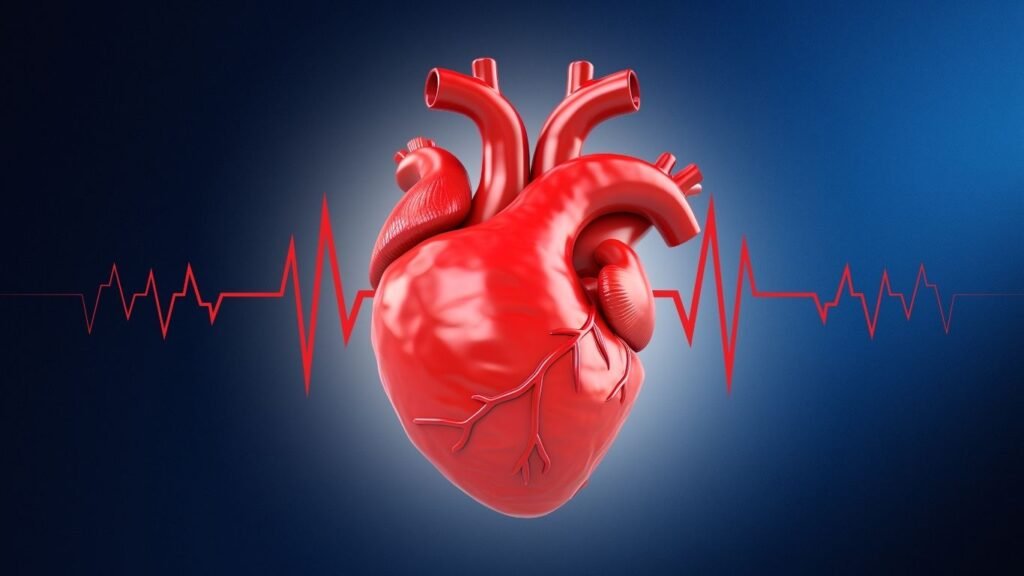
Has this ever happened to you when you get scared: your heart starts beating faster, you get a sudden rush of energy in your muscles and a feeling of butterflies in your stomach? So why does it happen? It’s a natural response shaped by millions of years of evolution. It is one of the body’s most basic survival responses. You can feel your heart suddenly thumping against your ribs when you’re terrified. Whether it’s a looming shadow, a sudden loud noise, or a near-miss in traffic, that racing heartbeat isn’t a malfunction. It’s your body’s ancient survival system kicking into gear.
What is it?
When we get scared, our heart beats faster due to the fight-or-flight response, an evolutionary survival mechanism triggered by the brain. Upon perceiving a threat, several stress hormones cause physiological changes to prepare the body for immediate action:
- Increased Heart Rate and Force: The heart beats faster and harder to pump blood more efficiently.
- Enhanced Oxygen Delivery: Your breathing speeds up, and blood flow is redirected toward muscles that may need to act quickly.
- Energy Mobilization: The liver releases glucose and fat into the blood to provide immediate energy for fighting or fleeing.
While this response was essential for early humans facing physical threats. It is still triggered by modern psychological stressors, resulting in the sensation of a racing heart even when no physical danger is present.
How does it work?
It all begins in a small, almond-shaped cluster of neurons deep inside your brain called the amygdala. It’s the threat-detection centre; it’s always active, searching for threats, constantly processing sensory information (what you see, hear, and feel) for danger. When it detects a threat, it doesn’t wait for your conscious mind to process it and find a solution; it takes action immediately. It sends a distress signal to another part of your brain called the hypothalamus, which acts as your body’s command centre.
The hypothalamus receives the alarm and instantly activates your sympathetic nervous system—the accelerator pedal of your nervous system. It does this by sending a rapid electrical signal down your spinal cord.
The electrical signal from your spinal cord directly stimulates your adrenal glands to release a surge of epinephrine (more commonly known as adrenaline) directly into your bloodstream. The hypothalamus also activates a slower stress-response system that leads to the release of cortisol, which helps keep the body prepared if the threat continues.
Why does the heart beat faster?
The cocktail of chemicals released by your body in the process is responsible for your rapid heartbeat. Adrenaline and norepinephrine bind to receptors in the heart, causing it to beat faster and contract more forcefully. These chemicals don’t just make your heart beat faster; they make it beat harder. They cause the heart’s muscle fibres to contract with more force, pumping a larger volume of blood with every squeeze.
What happens when the danger passes?
Once the threat is gone—you realise the “shadow” is just a coat on a chair—another part of your brain (the prefrontal cortex) catches up to the amygdala. It sends an “all-clear” signal. If our prehistoric ancestors saw a predator in the bushes, they did not have time for a leisurely debate about whether it was a threat. They needed an immediate, physical upgrade. The racing heart is the engine of that upgrade. It takes oxygen and glucose from your lungs and liver and shuttles them to your muscles at top speed; it helps your physical readiness.
Key takeaways
So the next time your heart starts pounding when you’re scared, remember that it’s not malfunctioning. Your brain has detected a possible threat and activated an ancient survival system, preparing your body to react before you’ve even had time to think about it.