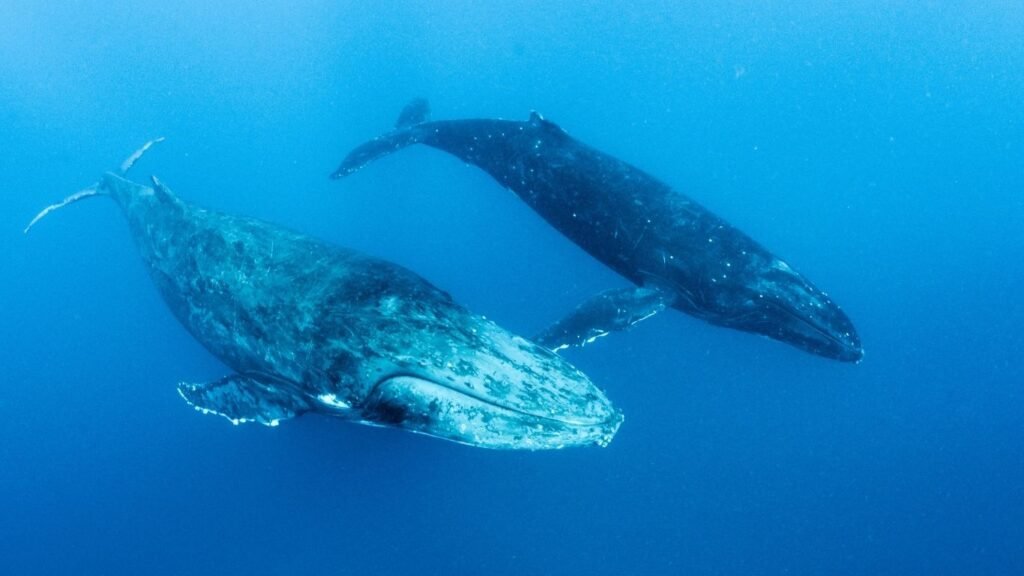
The blue whale is the biggest animal to ever exist on this planet. It is larger than even the biggest dinosaurs known from the fossil record. It weighs roughly 25 times as much as the largest living land animal, the elephant. Even the fin whale, the second-largest animal on the planet, weighs only about half as much. To be exact, they can grow to over 30 meters (100 feet) in length and weigh up to an astonishing 200 tonnes. A newborn calf is already about 7 meters (23 feet) long and weighs over 2 tonnes, gaining roughly 90 kilograms (200 pounds) per day while nursing on its mother’s rich milk.
How come they grow so big?
But what drove the blue whale to gigantism? Through multiple studies carried out in subjects like archaeology, physiology and ecology, researchers are just now beginning to understand the reasons for this evolution, pointing out the advantages and also the risks of maintaining such a size.
Interestingly, it all comes down to their feeding style. Around 7 to 10 million years ago, a new lineage of whales called rorquals (which includes blue whales) evolved a unique strategy called “lunge feeding.”
What is lunge feeding? It’s a feeding style where rorqual whales (such as blue, fin, and humpback whales) use a burst of speed to gulp a large quantity of water and prey together and filter them through baleen plates (the big white plates in their mouth).
And how did that help them to become the largest animal on the planet?
Changes in ocean conditions increased the availability of dense patches of prey such as krill, giving large whales access to enormous amounts of food at once, providing the high-calorie reward needed to offset the massive energy cost of lunge feeding. The blue whale’s size evolved alongside its specialised feeding strategy. Bigger whales can open their mouths wider and engulf more prey, making the huge energy cost of the lunge worthwhile. Large body size can improve metabolic and locomotor efficiency.
How can a blue whale survive at this size?
Several factors help the Blue whale to maintain its size. First, the food blue whales exclusively prey on krill. Krill are high in nutrients and swarm in very large patches, reaching up to areas of 450 square kilometres. A single blue whale consumes roughly 4 to 6 tons of krill per day during peak feeding season; a single super-swarm contains enough concentrated energy to feed an entire population of blue whales for months.
Second, water. Water’s buoyancy supports much of a blue whale’s enormous weight. On land, gravity would place enormous stress on its bones and tissues, but in water, buoyancy supports its body. On land, an animal of this size will crush itself under its own weight due to gravity. And forward movement only fights hydrodynamic drag, not gravitational weight.
Third, the blubber. A blue whale’s blubber layer can be up to 12 inches (30 cm) thick. This thick layer helps reduce heat loss in cold water, lowering the amount of energy the whale needs to spend maintaining its body temperature.
Key takeaways
The biggest animal on the planet isn’t a creature from the distant past—it exists today. It exists with us in the present, in the oceans right now, living, breathing, alive and roaming the planet as we speak. It’s living proof of how the right conditions and food abundance can help a creature reach proportional size.
Sources