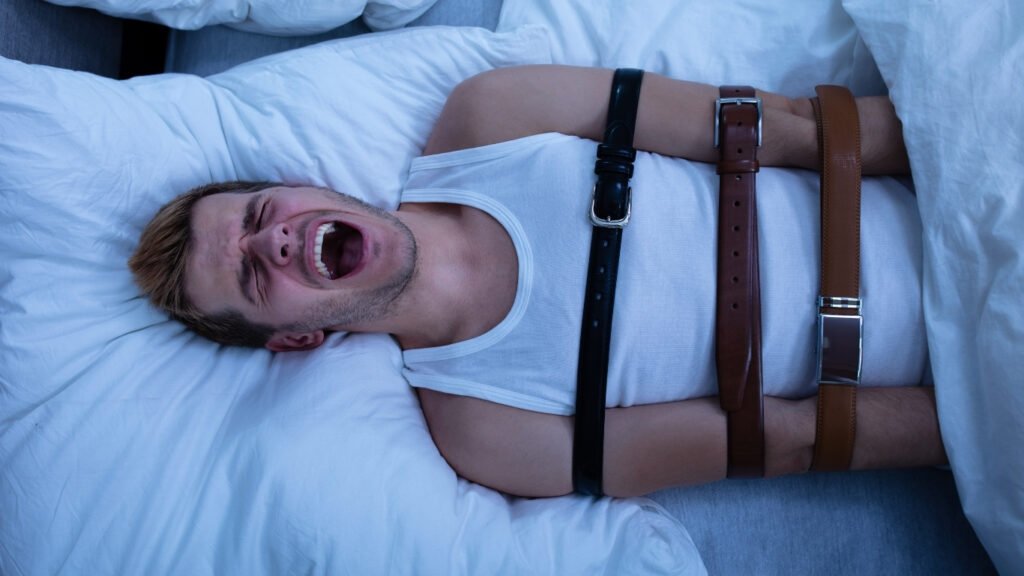
Intro
Have you ever woken up in the middle of the night, fully aware of your surroundings but unable to move an inch? You may even feel as though someone—or something—is in the room with you. Some people see a dark figure, hear strange sounds, or feel a heavy presence pressing down on their chest. For someone experiencing it for the first time, it can be terrifying.
So, what is happening? Is there really an evil presence in the room with you, watching you, or is the brain creating the experience?
The answer is sleep paralysis—a strange state that can occur when consciousness returns before the body has fully emerged from the paralysis of REM sleep.
What is it?
Sleep paralysis happens during the transition between wakefulness and REM sleep. Your brain gains consciousness, but your body stays paralysed. You see dark shadows, feel a weight on your chest and hear sounds; it is a terrifying experience for sure.
Sleep paralysis is relatively common, although estimates of how many people experience it vary between studies. Its episodes typically last from a few seconds to a few minutes and often include intense fear, a sensation of pressure on the chest, and vivid hallucinations of threatening presences or intruders.
It is generally harmless if the episodes are not frequent; many people experience sleep paralysis just once in their lifetime. If episodes happen frequently, cause significant distress, interfere with sleep, or occur alongside symptoms such as excessive daytime sleepiness, it’s worth discussing them with a healthcare professional.
What happens during sleep paralysis?
Sleep paralysis happens during the transition between wakefulness and REM sleep, in which a person is conscious but unable to move or speak. What is REM (Rapid Eye Movement) sleep? During this phase, brain activity becomes highly active and resembles that of being awake.
The most vivid dreams appear in this sleep. During REM sleep, your brain temporarily switches off most of your muscles so you don’t act out your dreams. Sometimes, your consciousness wakes up before this paralysis wears off, leaving you awake but unable to move.
Why do people see figures and feel a presence?
People with sleep paralysis may see shadowy figures or other hallucinations because parts of the dreaming state can overlap with their awareness of the real environment.
Researchers think that the combination of REM-related dreaming, fear, and altered sensory processing may contribute to the vivid hallucinations and sense of presence experienced during sleep paralysis.
What increases the risk of sleep paralysis?
Several factors can make sleep paralysis more likely, including:
- Lack of sleep, jet lag, shift work, and inconsistent routines disrupt normal sleep architecture and increase the likelihood of REM intrusion.
- Sleeping on the back (supine position) is consistently associated with a higher frequency of episodes.
- High levels of stress, anxiety, PTSD, and bipolar disorder are strongly correlated with increased incidence.
- Conditions such as narcolepsy and obstructive sleep apnea significantly raise the risk due to fragmented REM regulation.
- A family history of sleep paralysis and the use of alcohol, nicotine, or certain medications (like those for ADHD) can also contribute.
Myths associated with sleep paralysis
For centuries, many myths have accumulated all around the world due to the terrifying nature of sleep paralysis.
People from many cultures have experienced this phenomenon and linked it to their beliefs surrounding evil spirits, demons of the night. The most famous myths come from medieval Europe about evil demons, incubi and succubi, attacking people in their sleep. In modern times, some researchers have suggested that certain alien-abduction experiences may be influenced by sleep paralysis and the cultural beliefs surrounding it.
These myths are so powerful because our cultural beliefs can actually shape the experience itself. These beliefs can make the experience even more frightening, especially when someone interprets the hallucinations as evidence of a supernatural threat.
Key takeaways
Sleep paralysis, though terrifying, is a common, generally benign, and temporary phenomenon. It’s a brief moment when your mind is awake, but the temporary paralysis of REM sleep hasn’t worn off yet. Knowing the science behind it won’t necessarily make an episode less terrifying, but it may help you understand what is happening and reduce some of the fear. If episodes become frequent, severely disrupt your sleep, or occur alongside excessive daytime sleepiness or other concerning symptoms, it’s worth speaking with a healthcare professional.