Extremophiles are organisms that thrive under environmental conditions that are extreme for most forms of life. These conditions may include very high or low temperatures, extreme acidity or alkalinity, high salt concentrations, intense pressure, or other environmental stresses. The word extremophile combines extreme with the Greek-derived suffix -phile, meaning “loving” or “having an affinity for.” Unlike organisms that merely survive harsh conditions, true extremophiles have their optimal growth under extreme conditions.
Most known extremophiles are microorganisms, particularly bacteria and archaea, although some eukaryotes, including certain fungi and single-celled organisms, also qualify. Their adaptations demonstrate how life can persist in environments once considered unsuitable for living organisms and help scientists investigate the possible limits of life on Earth and elsewhere in the universe.
Extremophiles vs. Extremotolerant Organisms
An important distinction exists between extremophiles and extremotolerant organisms. Extremophiles grow best under extreme conditions, while extremotolerant organisms can tolerate such conditions without necessarily growing best in them.
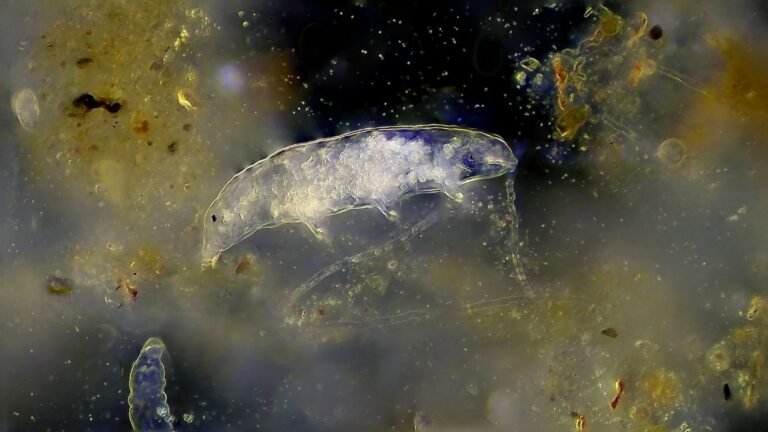
Tardigrades, commonly called water bears, illustrate why this distinction matters. Some can survive extreme cold, drying, radiation and even brief exposure to the vacuum of space under particular conditions. Much of this resilience comes from their ability to enter dormant states, including a compact form called a tun during severe water loss. When conditions improve, surviving animals can become active again.
However, tardigrades are not invincible, and their tolerance depends on the species, whether they are active or dormant, and the conditions involved. Their ability to endure extremes should not be confused with an ability to thrive in those environments.
A Classification of Survival
Scientists classify extremophiles according to the environmental conditions in which they thrive. For example, thermophiles prefer high temperatures, psychrophiles thrive in cold environments, halophiles prefer high salt concentrations, and acidophiles grow best under acidic conditions.
Some organisms tolerate several extremes at once. These are often called polyextremophiles. For example, microorganisms living in certain hot, acidic environments must cope with both high temperatures and low pH. Others inhabit deep-sea environments, where high pressure and limited energy sources create additional challenges.
Record Holders and New Discoveries
The limits of life continue to surprise scientists. For decades, the upper temperature limit for the growth of known eukaryotes—organisms whose cells contain a nucleus—was around 60°C.
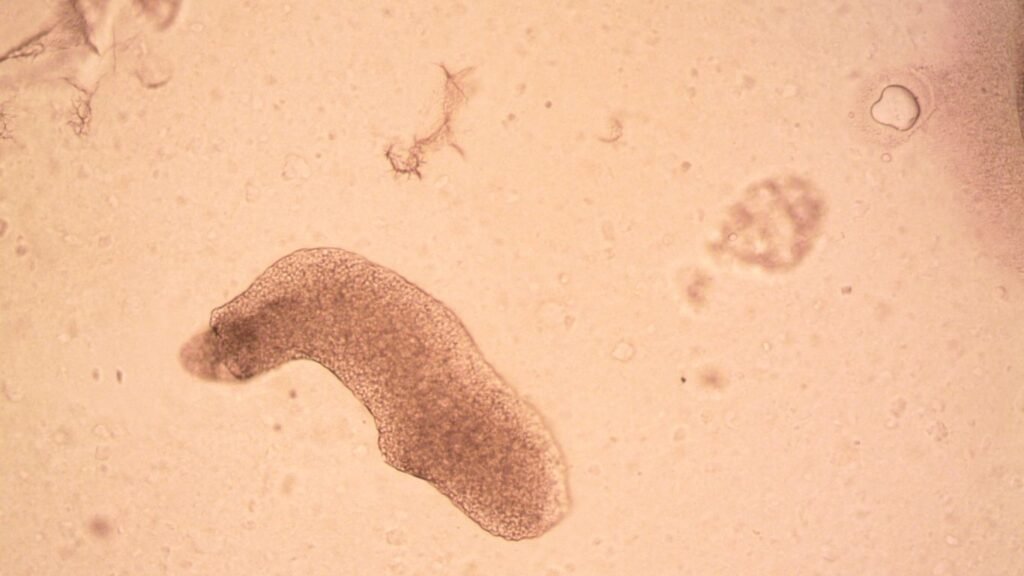
In September 2026, researchers reported a geothermal amoeba named Incendiamoeba cascadensis in a study published in the journal Cell. Found in a hot spring near California’s Lassen Volcanic National Park, this species can reproduce at temperatures up to 63°C and remains capable of movement at 64°C. Researchers also found that it could recover after a brief, five-minute exposure to 70°C. However, this does not mean it can grow at 70°C.
The discovery establishes a new upper temperature record for known eukaryotic growth. It also shows that some complex, single-celled organisms can tolerate higher temperatures than previously demonstrated.
The highest confirmed temperature for microbial growth is even more remarkable. The archaeon Methanopyrus kandleri has been shown to grow at 122°C under high-pressure laboratory conditions. Such pressure helps maintain water in a liquid state at temperatures above its normal boiling point. This remains the highest well-established temperature for microbial growth, although it does not prove that 122°C is the absolute limit for all possible life.
Habitats and Ecological Roles
Extremophiles inhabit a wide range of environments, including hot springs, deep-sea hydrothermal vents, polar ice, highly salty lakes, acidic drainage systems, alkaline lakes and deep underground sediments. Some microorganisms also survive in human-made environments, such as radioactive waste sites and spacecraft assembly clean rooms, although not every organism found there is necessarily an extremophile.
These organisms play important roles in their ecosystems. Some microorganisms living in oxygen-free environments produce methane, while others obtain energy by oxidizing substances such as iron or sulfur. In certain environments, they form the foundation of food webs that depend on chemical energy rather than sunlight.
Their unusual adaptations are also useful to researchers. Enzymes from heat-loving microorganisms, for example, can remain functional at temperatures that would damage many ordinary proteins. Studying these organisms can therefore help scientists develop and improve processes used in biotechnology and industry.
Conclusion
Extremophiles reveal how adaptable life can be, but their abilities have limits. The highest well-established temperature for microbial growth is currently 122°C, demonstrated by Methanopyrus kandleri under high-pressure conditions. Meanwhile, the discovery of Incendiamoeba cascadensis, which can reproduce at 63°C, has pushed the known temperature limit for eukaryotic growth.
These findings do not mean that life can survive every extreme. Instead, they show that the boundaries of habitability are shaped by the particular adaptations organisms possess—and that some of those boundaries are still being explored.
By studying extremophiles, scientists can better understand the limits of life, investigate how organisms function in unusual environments, and refine the search for possible life beyond Earth. As researchers explore more of our planet’s extreme habitats, they may discover organisms with adaptations that further expand our understanding of biology.
Source: